Ink & Algorithms
AI News This Week: OpenAI's Jalapeño | AI Weekly Pulse #1
The era of relying solely on general-purpose GPUs is officially over as custom AI silicon and test-time compute scaling dominate this week's 10-gigawatt infrastructure shifts. From OpenAI and Broadcom’s custom "Jalapeño" LLM inference chip and Google’s GPQA-topping Gemini 2.5 Pro "Deep Think" mode to Samsung's expansive global rollout of ChatGPT Enterprise, the industry focus has sharply pivoted toward highly efficient, agent-driven deployment. Are your current software architectures and security workflows prepared to integrate these massive agentic AI advancements before your competitors do?
📈 Macro Shifts
Big-picture AI policy, research breakthroughs & industry moves that reshape the landscape every builder
operates in.
#1

OpenAI and Broadcom have officially unveiled "Jalapeño," a custom ASIC built from the ground up to run large language model inference. Rather than adapting existing hardware, engineers started with a blank slate and designed the chip around the networking, kernel operations, and memory movement that frontier models actually demand. The result went from concept to manufacturing tape-out in just nine months, a pace made possible in part by OpenAI's own internal AI tools. Engineering samples are already running real ML workloads in lab settings at target clock speeds, including the GPT-5.3-Codex-Spark model. The chip also anchors a longer-term partnership between the two companies: a multi-generation, 10-gigawatt infrastructure buildout, with first deployments penciled in for late 2026.
Key Highlights:
Jalapeño is a purpose-built inference accelerator targeting roughly 50% lower compute costs compared to general-purpose GPUs.
The full ASIC design cycle wrapped in nine months, a timeline OpenAI attributes in part to its own AI models.
Microsoft is expected to buy around 40% of the initial production run for integration into its global data centers.
Source: June 24, 2026 - OpenAI Company Announcement
#2
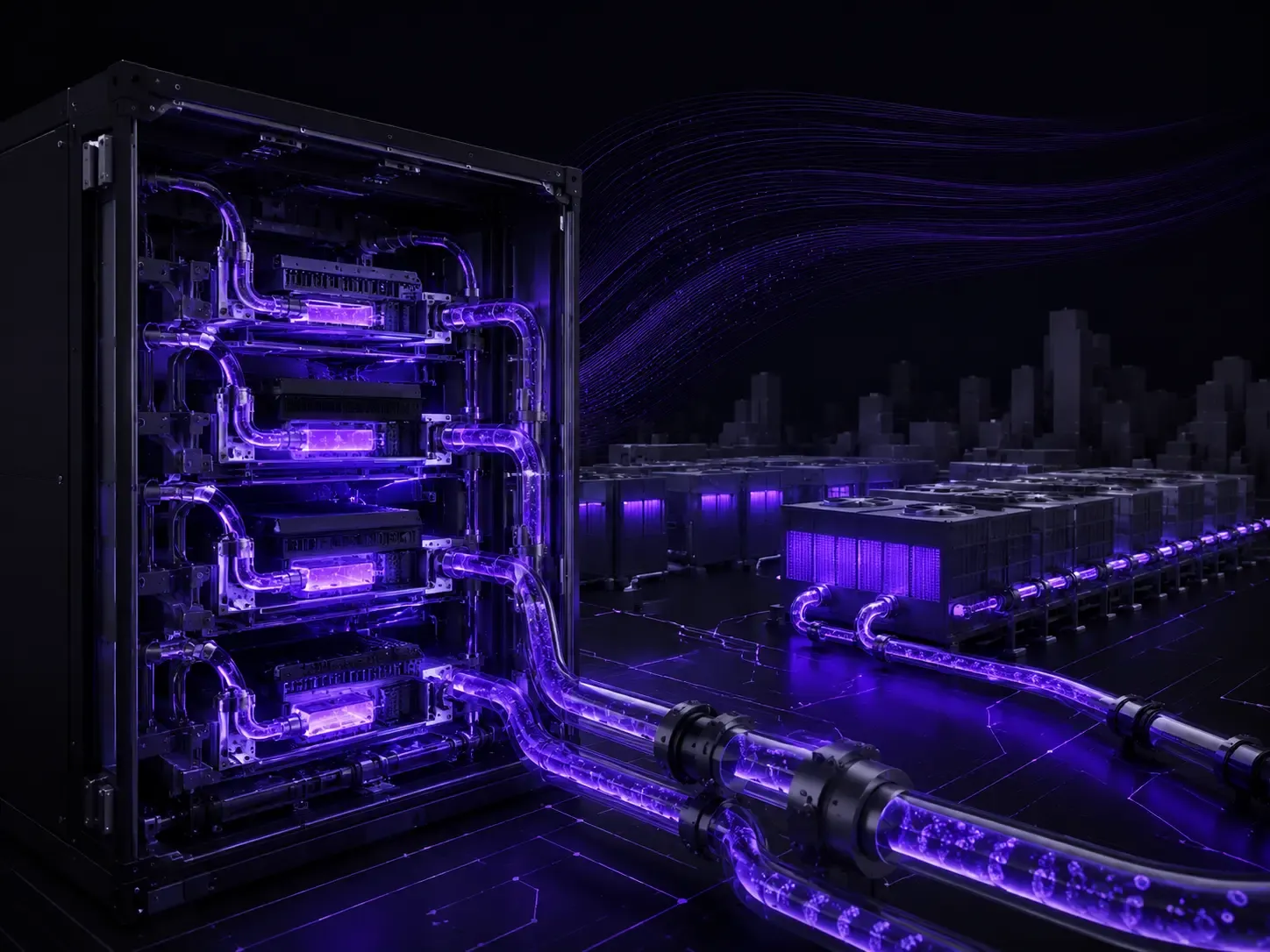
NVIDIA's DSX AI factory reference design introduces what the company is calling a milestone architecture for its Rubin generation of AI infrastructure. The headline feature: 100% liquid cooling across every compute and networking component in the system. Cooling fluid, a mix of 75% water and 25% propylene glycol, circulates at temperatures up to 45°C (113°F) while still pulling heat away from the processors effectively. The practical implications go beyond the cooling fluid itself. By removing internal server fans, perforated bezels, and any air-cooling dependencies entirely, the sealed-panel Rubin servers let data centers in a wide range of climates dump thermal waste directly into the facility loop. No mechanical chillers. No external fans required. The system also runs a closed loop, meaning zero water consumption during normal operation, and fluid routing at the tray level is simplified down to a single inlet and outlet per tray.
Key Highlights
Fully fanless and liquid-cooled across all GPUs, CPUs, and networking hardware, with no exceptions.
High-temperature liquid cooling up to 45°C allows data centers to drop mechanical chillers altogether and cut cooling energy overhead.
The closed-loop design uses no water during operation and is compatible with commercial waste heat recovery systems.
Source: June 21, 2026 - NVIDIA Corporate Blog
#3

Google has released Gemini 2.5 Pro, and the headline addition is "Deep Think," an extended reasoning mode aimed squarely at the kinds of problems that trip up most models: complex scientific questions, advanced math, and multi-step programming tasks. On the GPQA Diamond leaderboard, which tests graduate-level physics, chemistry, and biology, the model scored 82.4%, ahead of Fable 5 at 79.1% and GPT-5.5 at 76.3%. Deep Think works the way most extended reasoning architectures do, running internal search and verification loops before committing to an answer rather than responding immediately. Pricing reflects the two-tier nature of the model. Standard API access runs $2.50 per million input tokens. Enabling Deep Think, which is considerably more compute-intensive, costs roughly four times that.
Key Highlights
Tops the GPQA Diamond benchmark for graduate-level scientific reasoning with an 82.4% accuracy rate, outperforming current competing models.
Introduces Deep Think, a native test-time compute scaling feature that lets the model decompose harder problems more thoroughly during inference.
Separates API pricing by mode: $2.50 per million input tokens for standard calls, with Deep Think operations running at a 4x premium.
Source: June 22, 2026 - Build Fast with AI / Industry Leaderboard Tracking
#4

Qualcomm is acquiring Modular Inc. in an all-stock deal valued at roughly $3.9 to $4 billion. The move is aimed at shoring up Qualcomm's software story for generative and agentic AI, extending its reach across both edge and cloud environments. The deal is expected to close in the second half of 2026.
Key Highlights:
Brings Modular's unified compute platform together with Qualcomm's silicon.
Broadens the company's appeal to developers, OEMs, and model creators looking to deploy AI more widely.
Strengthens Qualcomm's position in both data center and edge AI.
Source: June 24, 2026 - Qualcomm
#5

Patronus AI announced a $50M Series B on June 25, 2026, bringing its total funding to $70M. Greenfield Partners led the round, with Lightspeed, Notable Capital, Datadog, Samsung, and others participating. The capital will go toward expanding the company's simulation platform, including the launch of its first Digital World Model, a language diffusion world model built for training and stress-testing AI agents across coding, dialogue, research, and tool use scenarios in dynamic digital environments.
Key Highlights:
Shifting the focus from static evaluations to dynamic simulations, particularly for long-horizon agent tasks.
Revenue grew 15x over the past year; a preview of the Digital World Model is already available.
Founded by former Meta AI researchers and used by enterprises and developers.
Source: June 25, 2026 - Patronus Al Announcements
🛠️ Build & Deploy
Tools, frameworks, model releases & engineering advances you can act on this sprint.
#6

OpenAI has expanded its "Daybreak" initiative with a suite of automated cyber defense tools built around an updated version of GPT-5.5-Cyber. The pitch is straightforward: stop waiting for humans to patch vulnerabilities and let the system do it at machine speed. At the center of this is a new Codex Security cloud workflow that plugs directly into existing developer environments rather than requiring teams to change how they work. Early numbers are notable. The preview has already scanned over 30 million commits across 30,000 codebases, automating or validating hundreds of thousands of fixes in the process. The updated GPT-5.5-Cyber model also comes with reduced false refusal rates in authorized security contexts, while holding its own on complex, long-context engineering repositories.
Key Highlights
The upgraded GPT-5.5-Cyber model scores 85.6% on the CyberGym benchmark and refuses fewer legitimate requests in authorized red-teaming workflows.
The Codex Security plugin handles the full patching pipeline: analyzing threat models, tracing reachability paths, generating targeted code fixes, and verifying the results.
OpenAI launched "Patch the Planet," a sub-program under Daybreak focused on helping open-source maintainers ship security fixes faster using these tools.
Source: June 22, 2026 - OpenAI Security Announcement
#7

Mistral AI has released Mistral OCR 4, its latest optical character recognition model built specifically for high-fidelity document intelligence. The model goes well beyond basic text extraction, adding advanced layout understanding: precise object bounding boxes, structural block classification, and real-time inline confidence scoring. The goal is to close the gap between raw document scanning and the kind of clean, structured output that downstream LLMs can actually work with. On that front, the model shows benchmark improvements over leading proprietary alternatives. What makes it particularly interesting for enterprise buyers is the footprint. Despite the performance gains, the architecture stays lean and resource-efficient, which makes self-hosted deployment a realistic option for organizations that can't send sensitive documents to third-party APIs.
Key Highlights:
Mistral OCR 4 achieves state-of-the-art accuracy on complex document layouts and text extraction tasks.
Outputs granular metadata alongside extracted content, including block classifications and inline confidence scores.
The compact architecture is designed with self-hosted private cloud deployment in mind, making it viable for security-conscious enterprise environments.
Source: June 23, 2026 - Mistral
#8

Anthropic has introduced Claude Tag, an always-on AI teammate that lives inside Slack for Enterprise and Team customers, currently in beta. Instead of tucking Claude away in a private DM, teams can now tag @Claude directly in channels to delegate tasks, assign work, connect it to tools and codebases, and keep context shared across the whole conversation. It's a meaningful shift from how most people have used Claude in Slack so far, moving from one-on-one interactions to something closer to a genuine asynchronous team collaborator.
Key Highlights
Builds persistent context by following public channels over time.
Handles task delegation across code generation, analysis, and debugging.
Replaces and upgrades the existing Claude in Slack integration.
Source: June 23, 2026 - Anthropic Blog
#9
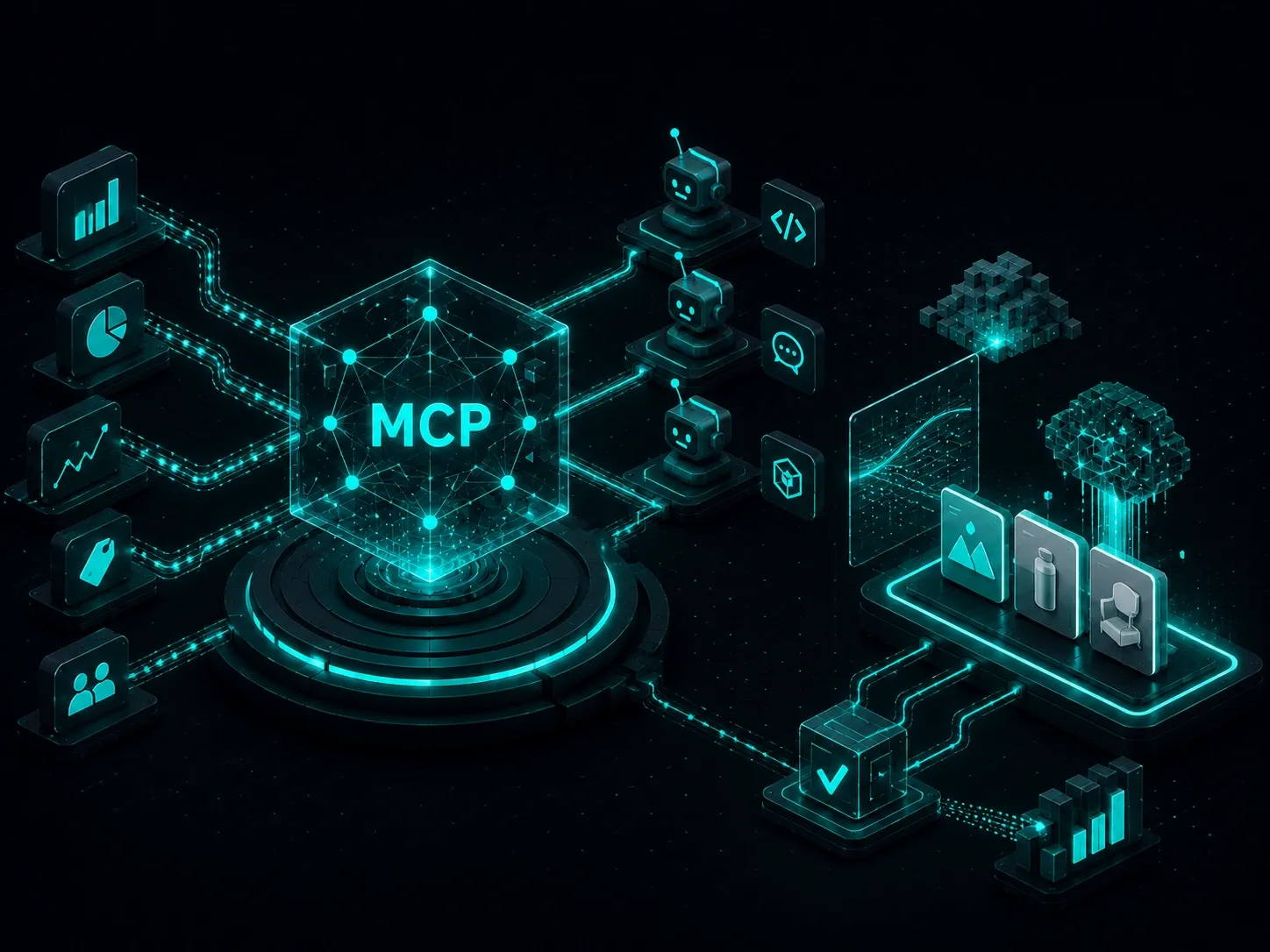
Pinterest has launched the Pinterest Model Context Protocol (MCP), an open infrastructure layer built to give external developer tools safe, structured access to internal platform data. In practice, it means third-party AI copilots, software agents, and enterprise development tools can now query live Pinterest campaign metrics, performance analytics, and keyword trends directly, without needing custom integrations for each use case. The protocol establishes standard connection points to make that possible. Alongside the MCP launch, Pinterest also rolled out its Performance+ creative AI model globally. The model watches multiple ad variants in real time and picks the best visual combination for each individual impression as it's being served.
Key Highlights
The MCP bridges live Pinterest ad insights with third-party developer ecosystems through standardized connection infrastructure.
Provides consistent schema access across ad campaigns, keywords, and creative analytics for programmatic and agent-based integrations.
Performance+ creative AI is now live globally, automating real-time multi-variant asset selection during ad delivery.
Source: June 25, 2026 - Campaign Middle East AI Platform Tracking
🧠 Applied AI
Real-world use cases, product launches, growth experiments & FinTech applications showing AI working in production.
#10

Samsung Electronics has finalized a broad agreement with OpenAI to roll out ChatGPT Enterprise and Codex to all employees in South Korea, as well as its global Device eXperience division. The move is a deliberate reversal of the internal bans Samsung put in place in 2023, when accidental source code leaks through public AI endpoints prompted the company to block consumer generative AI tools entirely. The 2026 deployment takes a different approach: a managed, enterprise-grade environment with strict administrative access controls, dedicated data-protection commitments, and role-based tracking built in from the start. Internal adoption has climbed sharply since the rollout, with research and engineering teams in particular showing an exponential rise in automated code output since late 2025.
Key Highlights
Samsung has completed a full enterprise rollout of ChatGPT Enterprise and Codex across its global Device eXperience division.
The managed environment maintains strict data boundaries, keeping internal code and corporate data out of public model training.
Codex now accounts for more than 85% of standard code output tokens among active technical staff.
Source: June 21, 2026 - OpenAI Customer Stories / Corporate Deployment Update
#11

At Cannes Lions 2026, Meta unveiled a suite of generative AI advertising tools built directly into Ads Manager, centered on an end-to-end creative generation system. Rather than starting from scratch, the system pulls from a brand's existing history: past ads, organic posts, and brand guidelines, then generates new text and visual variations that stay consistent with the company's established tone and identity. Meta also introduced a shared testing environment inside the Ads Manager tool tab, giving creative and media teams a single place to benchmark AI-generated assets against real performance data drawn from across Meta's apps.
Key Highlights:
Generates brand-aware creative assets by extracting style, voice, and visual identity from historical performance data.
Adds a centralized testing environment within Ads Manager for evaluating assets against performance metrics before scaling them live.
Turns multi-variant creative testing into a low-overhead, largely automated process, cutting down the effort typically involved in asset iteration.
Source: June 25, 2026 - Social Media Today / Campaign Middle East
#12

YCharts, the investment research and client engagement platform, has launched "Y," an AI agent built specifically for wealth managers and asset managers. The agent runs on Anthropic's Claude model family and operates natively within the YCharts platform, giving it direct, secure access to institutional financial data, calculation tools, and pre-formatted reporting systems. In practice, that means users can pull together portfolio data, generate client-facing performance summaries, and work through complex market data structures through a conversational interface, without jumping between separate tools to do it.
Key Highlights:
Brings Anthropic's Claude models natively into an institutional investment research environment.
Gives the agent direct execution access to proprietary financial tools, calculators, and report templates.
Converts conversational queries into structured, mathematically grounded reports, streamlining asset management workflows in the process.
Source: June 22, 2026 - PlanAdviser Product Launches
⚡ Stay ahead of the AI curve.
Every week, AI Weekly Pulse cuts through the noise - delivering the most important AI developments for Founders, Engineers, PMs, Marketers and FinTech professionals. No hype. No filler. Just what moves the needle for builders.
📖 Recommended Blogs
Discover the best deals, trending products, and must-have finds.
Categories
Solutions
Smart Solutions Powered by Tools We Trust
Recommended Solutions to Simplify Your Everyday Needs
Handpicked Solutions Backed by Real Results