Ink & Algorithms
AI News This Week: AI agent tools 2026 | AI Weekly Pulse #3
Three major AI labs dropped new frontier models in the same week - and that has not happened since early 2025. OpenAI's tiered GPT-5.6 family, Meta's paid API debut with Muse Spark 1.1, and xAI's coding-focused Grok 4.5 all landed within 48 hours of each other, fundamentally reshaping the agentic AI tools landscape overnight. Alongside the model race, OpenAI quietly shipped ChatGPT Work - an autonomous agent that doesn't just assist with tasks, it finishes them - while Google embedded a live Gemini-powered lead agent directly inside search ads, turning the conversion funnel into a real-time AI workflow.
So here's the question worth sitting with this week: when three frontier models ship simultaneously, every pricing tier drops, and AI agents start closing deals inside your ads - are you still evaluating AI, or are you already behind?
📈 Macro Shifts
Big-picture AI policy, research breakthroughs & industry moves that reshape the landscape every builder
operates in.
#1

OpenAI has moved on from the single-model approach. GPT-5.6 arrives as a family of three purpose-built tiers: Sol, the flagship built for demanding multi-step reasoning and agentic work; Terra, a balanced option designed for everyday enterprise tasks at a lower cost; and Luna, stripped down for speed and built to handle high-volume, latency-sensitive workloads. Sol puts up a 91.9% score on Terminal-Bench 2.1 in Ultra mode and a 54% efficiency gain in agentic coding over the previous generation. The release also ships "Ultra" mode - a coordination layer that runs multiple background agents in parallel on complex problems - plus tighter cybersecurity guardrails baked in.
Key Highlights
Three tiers - Sol, Terra, and Luna - let teams match the model to the workload, optimizing for cost or latency depending on what actually matters for the task.
Sol tops current benchmarks across coding, knowledge work, cybersecurity, and science.
"Ultra" mode brings multi-agent coordination to long-horizon, complex tasks that a single model pass won't cut.
Luna comes in at $1 per million input tokens, making high-volume, speed-first use cases genuinely affordable.
Source: July 9, 2026 - OpenAI
#2

Meta Superintelligence Labs shipped Muse Spark 1.1 this week, an upgraded multimodal reasoning model built for the kind of work that actually strains a model: agentic coding, tool use, computer interaction, and complex multimodal reasoning. What made the release notable wasn't just the model - it was what came with it. Meta simultaneously opened the public preview of the Meta Model API, its first paid model offering ever, priced at $1.25 per million input tokens and $4.25 per million output tokens. The model carries a 1M-token context window, leads on professional tool-use benchmarks including JoobBench and MCP Atlas, and is expected to eventually replace Llama models across Meta's own product surfaces.
Key Highlights
This is Meta's first paid API model - a real departure from the fully open-source Llama strategy the company has run for years.
Pricing sits in a deliberate middle ground, undercutting high-end frontier models without racing to the bottom.
A 1M-token context window pairs with genuine multi-step reasoning, tool use, and debugging chops - not just benchmark performance.
The positioning is direct: Meta is coming for the agentic developer workflow market that OpenAI and Anthropic currently own.
Source: July 7, 2026 - Meta
#3

xAI launched Grok 4.5 this week, and the backstory matters as much as the benchmarks. The model was built in collaboration with Cursor, the AI coding startup, which means the software engineering focus isn't incidental - it's baked into the training. At $2 per million input tokens and $6 per million output tokens, it hits roughly 86% in agentic mode on Terminal-Bench 2.1, putting it in direct competition with the top offerings from OpenAI and Anthropic. It's available now through Grok Build, Cursor, and xAI's console, though EU users are still waiting on a rollout date.
Key Highlights
Joint training with Cursor gives Grok 4.5 a genuine software engineering orientation, not just general-purpose capability retrofitted for code.
86% on Terminal-Bench 2.1 in agentic mode is a real number - and the pricing undercuts flagship models while staying competitive with the mid-tier.
Available via Cursor, Grok Build, and xAI's console today; EU availability is still pending.
Source: July 8, 2026 - x.ai
#4

The European Commission dropped a significant policy document this week: a comprehensive Action Plan on Cybersecurity and Artificial Intelligence, co-developed with ENISA, that lays out how the EU plans to deploy advanced AI safely while tightening the region's overall digital defenses. The framework isn't light on requirements. It mandates pre-market evaluation of AI models before they touch critical infrastructure, establishes a dedicated secure testing platform for sectors like energy, finance, and transport, and kicks off a Grand Challenge on AI for cybersecurity aimed at building sovereign European defense solutions. Crucially, it doesn't operate in isolation - the plan is designed to work across the existing regulatory stack, coordinating implementation with the AI Act, Cyber Resilience Act, DORA, and NIS2 Directive simultaneously.
Key Highlights
Pre-market AI model evaluation is now mandated, with a secure testing platform specifically built for critical sectors.
Enforcement is coordinated across four existing frameworks: the AI Act, DORA, NIS2, and the Cyber Resilience Act - no more siloed compliance.
Open-source AI gets a formal push for vulnerability detection, alongside the launch of an EU cybersecurity Grand Challenge.
For enterprises operating in Europe, particularly in regulated industries, this gives the clearest compliance roadmap yet for deploying AI legally and safely.
Source: July 7, 2026 - European Commission Digital Strategy
#5

Lyzr, a Jersey City startup building AI agents for enterprise clients, did something unusual with its Series B: it handed a significant chunk of the fundraising process to its own AI agent, SivaClaw. The agent fielded questions from more than 130 investors, drafted investment memos, and tracked how potential backers engaged with pitch materials. The round is on track to close at $100 million, with a valuation sitting at roughly $500 million.
Key Highlights
SivaClaw ran investor outreach and memo drafting autonomously - not as a demo, but as the actual fundraising workflow.
It's about as direct a proof of concept as a company can offer: the product handled one of the highest-stakes business processes its founders face.
The valuation has roughly doubled since Lyzr's previous round earlier in 2026.
Source: July 9, 2026 - TechCrunch
🛠️ Build & Deploy
Tools, frameworks, model releases & engineering advances you can act on this sprint.
#6

LangChain and NVIDIA jointly released the NemoClaw Deep Agents blueprint this week - a reference architecture aimed at one of the more persistent pain points in enterprise AI: building autonomous agents that are actually safe to deploy against real corporate data. The blueprint combines LangChain's orchestration layer with NVIDIA's NeMo and NIM computing stack, then wraps it in standardized security frameworks and data access controls. The result is a set of concrete technical patterns that engineering teams can follow when building self-directing AI systems, rather than figuring out the security model from scratch every time.
Key Highlights
A standardized reference architecture for secure, enterprise-grade autonomous agent deployment - something the industry has badly needed.
Brings together LangChain's orchestration strengths and NVIDIA's NeMo and NIM stack in a single, integrated blueprint.
Ships with security protocols, data governance patterns, and a scalable design teams can adapt without rebuilding the foundations.
Source: July 10, 2026 - SUSE
#7

Cloudflare opened the waitlist for its Monetization Gateway this week, and it's addressing something the web has quietly been struggling with: how do you get paid when your visitors aren't human? Built on the x402 protocol, the infrastructure layer is designed to automate financial transactions between machines - no human checkout flow required. Websites, APIs, and data owners can configure micropayment requirements that autonomous AI agents fulfill programmatically when accessing content or pulling data. It's a revenue model built from the ground up for an internet where a growing share of traffic comes from agents, not people.
Key Highlights
Built on the x402 protocol, which standardizes instant, automated machine-to-machine micropayments.
Lets websites, APIs, and datasets charge AI agents directly for access - programmatically, at the moment of retrieval.
Creates a purpose-built financial layer for monetizing AI-driven web and API traffic, rather than retrofitting human payment flows.
Source: July 7, 2026 - Cloudflare Blog
#8
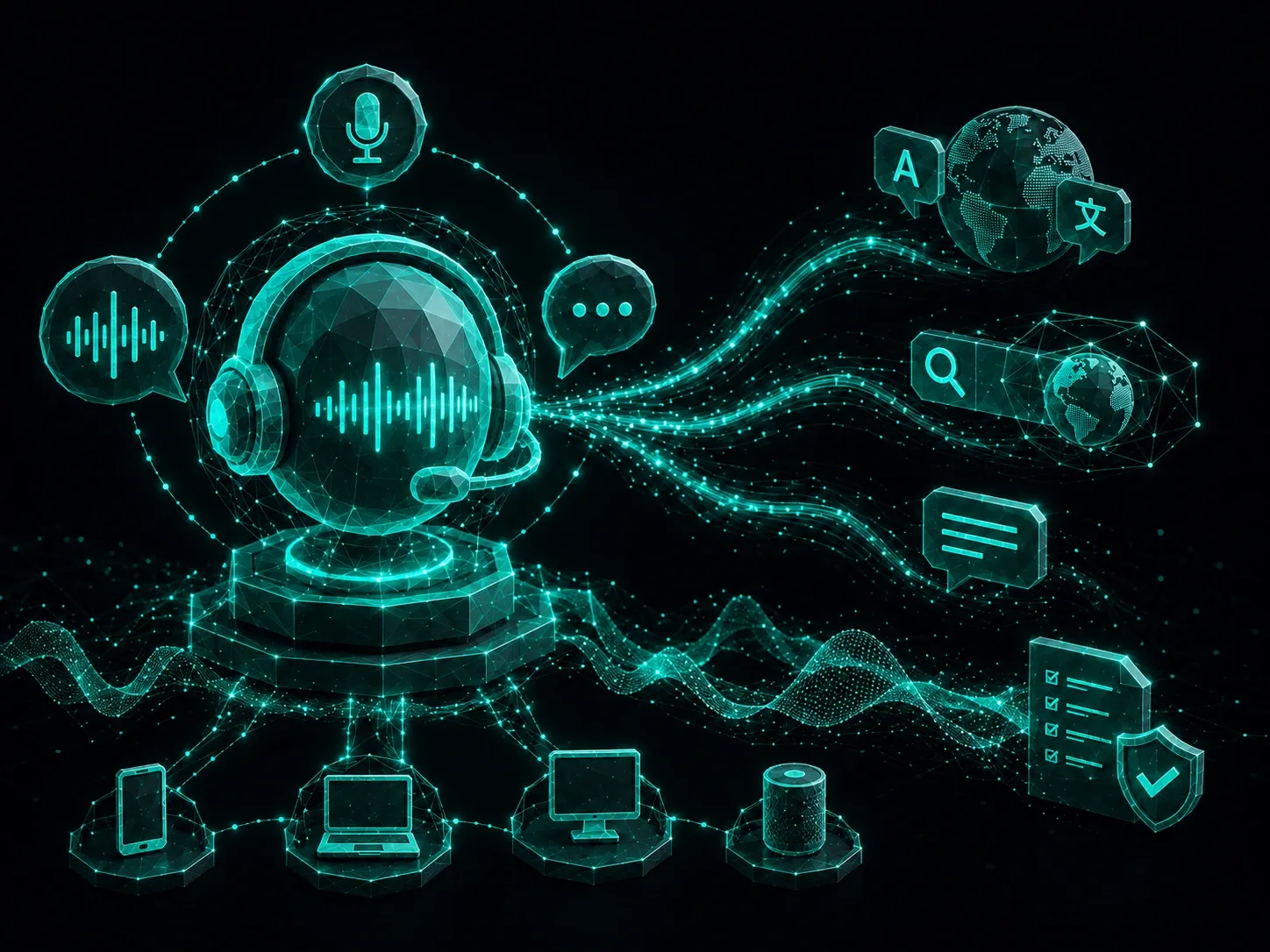
OpenAI released GPT-Live-1 and GPT-Live-1 mini this week, and the core difference from previous voice models is architectural. Both run full-duplex - meaning the model listens and speaks at the same time, without waiting for you to finish before it starts processing. That eliminates the stilted pause-and-respond rhythm that has made voice AI feel unnatural for years. The architecture handles real-time translation, web search, and background task delegation while keeping the conversation going. GPT-Live powers the updated ChatGPT Voice experience across platforms, with the mini version opened up to free-tier users. OpenAI also published a dedicated System Card alongside the release, covering the safety evaluations and guardrails that went into both models.
Key Highlights
Full-duplex architecture means no more conversational lag - the model processes input and output simultaneously, and natural interruptions actually work.
Real-time translation and web search run natively during active voice conversations, not as separate modes.
GPT-Live-1 mini is available to free users; anything requiring heavy reasoning gets delegated to frontier models like GPT-5.5 in the background.
A System Card covering safety evaluations and model guardrails shipped alongside the release.
Source: July 8, 2026 - OpenAI
#9

Accenture and Google Cloud launched Accenture Edge this week, a suite of pre-built agentic AI solutions aimed squarely at mid-market companies - those with annual revenues between $300 million and $3 billion. The target is deliberate. These are organizations large enough to have complex operational needs but typically without the in-house engineering depth to build custom agent infrastructure from scratch. The suite runs on Google's Gemini Enterprise Agent Platform and Agentic Data Cloud, and comes with ready-to-deploy, industry-specific agents for retail, banking, and telecom. Security isn't bolted on after the fact either - Google AI Threat Defense is embedded natively, pulling in Mandiant and Wiz for continuous enterprise-grade monitoring. The whole platform is built around one goal: getting companies out of the pilot phase and into production.
Key Highlights
Built specifically for mid-market enterprises that need production-ready agentic workflows without a custom build - the agents come pre-configured for the sector.
Runs on the Gemini Enterprise Agent Platform with Google AI Threat Defense baked in natively, not added as an afterthought.
Industry-specific agents for retail, banking, and telecom, designed to deploy fast rather than require months of integration work.
Source: July 7, 2026 - Accenture Newsroom
#10

Mistral launched Leanstral 1.5 this week, and it's a different kind of coding model. Rather than generating code and hoping it behaves correctly, Leanstral 1.5 uses the Lean 4 proof assistant framework to produce mathematical proofs of software behavior - verifiable guarantees that the code actually does what it's supposed to do. It's a meaningful shift in what AI can offer for critical systems development, and the benchmark improvements reflect that. This isn't about writing faster boilerplate. It's about being certain.
Key Highlights
Integrates natively with the Lean 4 theorem proving environment, working within the formal verification toolchain rather than alongside it.
The model trades probabilistic code generation for deterministic formal verification - a fundamental change in the reliability guarantee on offer.
Aimed at industries where software failure isn't just a bug to patch: aerospace, finance, healthcare, and other high-stakes engineering environments.
Source: July 6, 2026 - Mistral AI
🧠 Applied AI
Real-world use cases, product launches, growth experiments & FinTech applications showing AI working in production.
#11
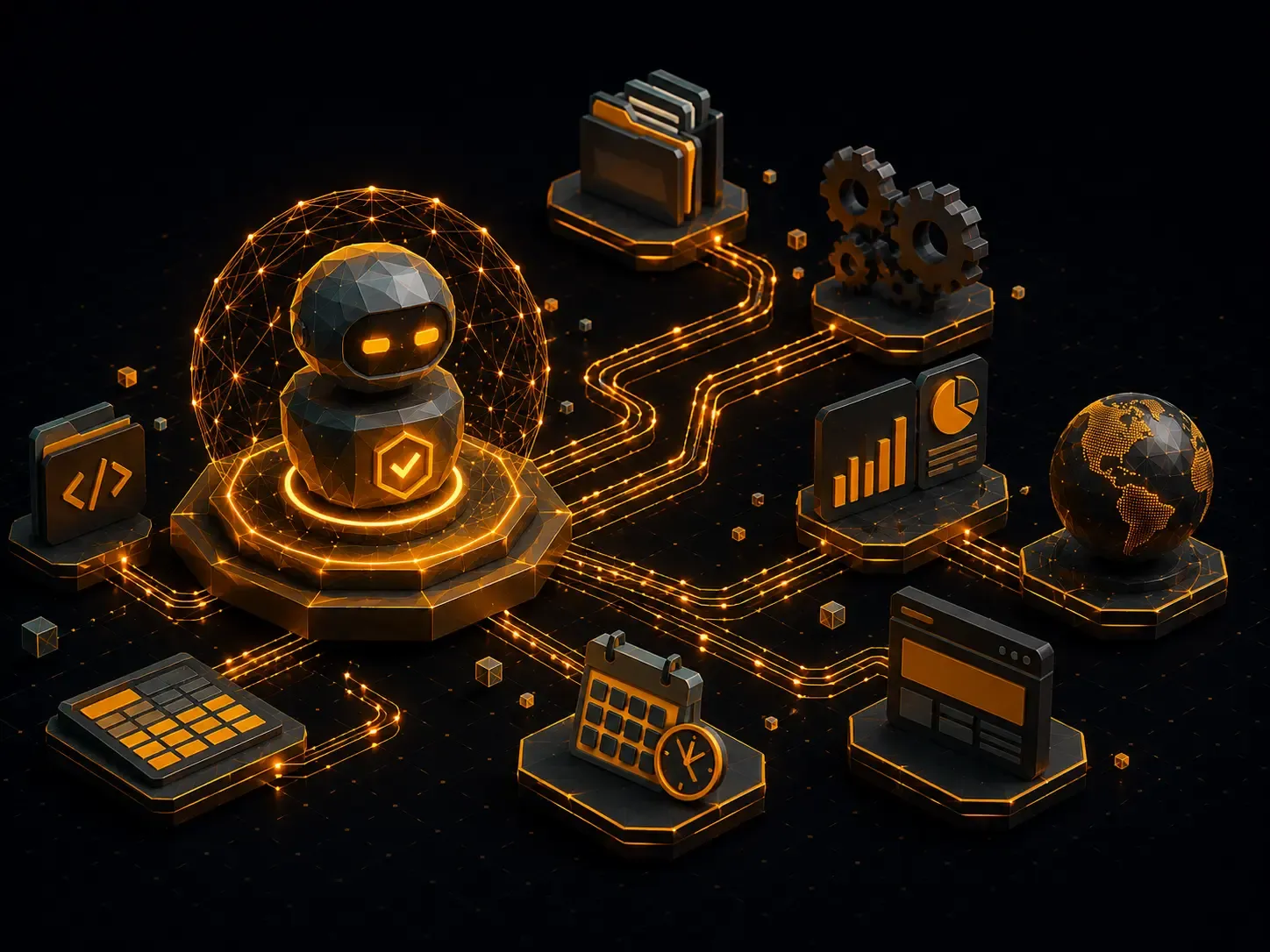
Alongside the GPT-5.6 launch, OpenAI shipped something that feels like a bigger deal in practice: ChatGPT Work, an autonomous agent designed to take a complex, multi-step project and actually finish it. Not draft a starting point. Not suggest an outline. Finish it. The agent uses Codex under the hood to navigate local files, move across software applications, and stay on task through long-running assignments, producing real deliverables - spreadsheets, slide decks, functional small-scale web apps. It lives inside a new unified desktop application for macOS and Windows that brings together the previous Chat and Codex interfaces into a single workspace, with support for scheduled tasks and milestone-based approval checkpoints so humans stay in the loop on longer jobs. The release followed a restricted vetting period aligned with government deployment protocols before going to the public.
Key Highlights
Runs autonomous, long-running workflows end to end, with human approval checkpoints built in at key milestones rather than constant interruption.
Folded into a unified desktop app that consolidates Chat and Codex - one interface instead of two.
Scheduled tasks and triggers mean it can monitor ongoing projects without someone manually kicking it off each time.
Went through a restricted vetting period tied to government deployment protocols before the public release.
Source: July 9, 2026 - OpenAI
#12
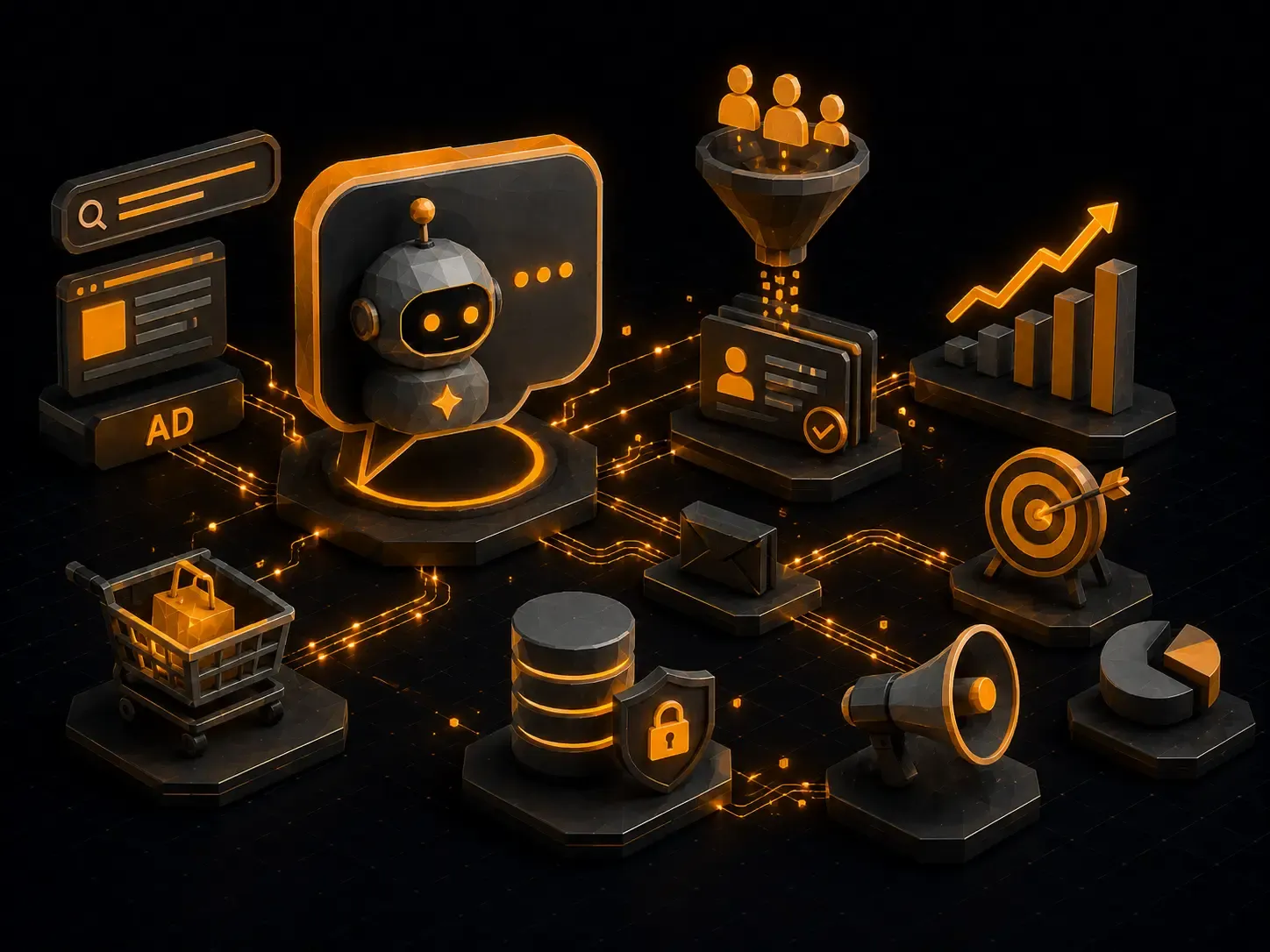
At Google Marketing Live 2026, Google unveiled Business Agent for Leads - currently in beta - and it's a notable departure from how search ads have worked for the past two decades. Instead of clicking an ad and landing on a form, consumers now interact with a Gemini-powered conversational agent embedded directly inside the ad unit itself. The agent answers questions in real time, qualifies leads, and collects first-party data before handing warm prospects off to a human sales team. Google also announced AI Max for Shopping and upgraded Demand Gen features as part of the same release, giving marketers better tools to optimize creative and get more out of their first-party data.
Key Highlights
Live conversational lead qualification happens inside the ad unit now - static forms are out, real-time AI dialogue is in.
First-party data gets captured at the very top of the funnel, before the prospect ever reaches a landing page.
AI Max for Shopping and enhanced Demand Gen creative optimization also shipped as part of the broader announcement.
The direction is clear: Google is pushing from marketing automation toward something closer to agent-driven marketing intelligence.
Source: July 9, 2026 - Google Blog
⚡ Stay ahead of the AI curve.
Every week, AI Weekly Pulse cuts through the noise - delivering the most important AI developments for Founders, Engineers, PMs, Marketers and FinTech professionals. No hype. No filler. Just what moves the needle for builders.
📖 Recommended Blogs
Discover the best deals, trending products, and must-have finds.
Categories
Solutions
Smart Solutions Powered by Tools We Trust
Recommended Solutions to Simplify Your Everyday Needs
Handpicked Solutions Backed by Real Results