Ink & Algorithms
AI News This Week: OpenAI Astra | AI Weekly Pulse #7
Two things happened this week that don't usually happen in the same news cycle: a frontier AI model got paused because it could find its own zero-day exploits, and the EU began fining companies that don't label their chatbots as AI. Both land in this issue. So does Alibaba's Qwen3.8-Max - a 2.4-trillion-parameter open-weight model that, in testing, ran a software engineering project solo for 16 days without a human in the loop. The pace is genuinely hard to keep up with right now. So the real question isn't whether AI is moving fast - it's whether your roadmap still makes sense given what dropped this week.
📈 Macro Shifts
Big-picture AI policy, research breakthroughs & industry moves that reshape the landscape every builder
operates in.
#1
Alibaba Cloud just released what it's calling its most capable model yet. Qwen3.8-Max runs on a Sparse Mixture-of-Experts architecture with 2.4 trillion total parameters, but here's the part that matters for real-world use: it only activates 95 billion of them during inference. That tradeoff between raw scale and computational efficiency is exactly what makes it interesting, especially paired with a context window that stretches up to 1 million tokens. The model was built for long, complex autonomous coding work, and Alibaba proved the point by having it run a software engineering project independently for 16 days straight, no human in the loop.
Key Highlights
The MoE architecture keeps all 2.4 trillion parameters available without burning them all on every request - only 95 billion activate per inference cycle.
Multimodal support is built in from the start, with strong rankings in both Text and Vision Arenas.
Developers can access it now through APIs on Alibaba Cloud Model Studio, with open weights coming.
Pricing lands at $2 per million input tokens and $6 per million output tokens.
Why This Matters
Frontier-level AI has mostly lived behind expensive proprietary walls. A massive open-weight model at this capability level changes that calculus for enterprises that have been waiting for a credible alternative. More importantly, the 16-day autonomous coding run isn't just a benchmark flex - it points to something real shifting in how AI fits into engineering workflows. Single-turn agentic tasks are one thing; a model that can manage an end-to-end software project over days is a different category entirely. For teams evaluating AI infrastructure, Qwen3.8-Max is now on the shortlist.
Source: August 3, 2026 - Alibaba Cloud
#2
OpenAI has paused all internal work on its upcoming model, code-named Astra, after internal evaluations came back with results serious enough to stop the project in its tracks. The issue: Astra crossed the "Critical" capability threshold under OpenAI's Preparedness Framework, which triggers when a model can autonomously find and build functional zero-day exploits against hardened, real-world systems. That's not a theoretical concern or a controlled lab result - the model actually got there. In response, OpenAI locked down the weights with encryption, moved execution into sandboxed environments, and brought in both government agencies and third-party safety organizations to assess what Astra's agentic coding capabilities actually mean.
Key Highlights
Astra didn't just identify vulnerabilities - it demonstrated the ability to autonomously develop and execute novel cyberattack strategies.
This is the first time any OpenAI model has hit the "Critical" threshold in the Preparedness Framework. A first of its kind, and not a comfortable one.
Development outside secure environments is paused until new controls are in place and external testing is complete.
Model weights are encrypted. Execution is sandboxed. Nothing runs freely right now.
Why This Matters
There's a version of this story where a lab quietly patches a problem and moves on. This isn't that. An AI model autonomously developing zero-day exploits against hardened systems is a different category of risk than anything the security industry has had to plan around before. The gap between discovering a vulnerability and weaponizing it has always given defenders some room to respond - that room is now much smaller. Security teams that haven't started thinking seriously about AI-driven defense don't have much runway left before the threat landscape looks completely different from what their current playbooks were written for.
Source: August 7, 2026 - OpenAI
#3

On August 2, 2026, the EU's AI Act transparency rules moved from policy document to legal reality. The European Commission's new obligations require machine-readable marks and visible labeling on specific categories of AI-generated content - deepfakes, AI-written text on public interest topics that hasn't gone through human review, and emotion recognition tools. The goal is straightforward: give people a fighting chance at knowing when they're looking at AI-generated content versus something a human actually made. This is the first major enforcement rollout under the broader European AI framework, and it's specifically aimed at cutting off the supply lines for misinformation, manipulation, and consumer deception. Companies with pre-existing generative systems get a runway until December 2026 to comply. Everyone else is on the clock now. Non-compliance carries fines up to €15 million or 3% of global annual turnover, whichever hits harder.
Key Highlights
Deepfakes, certain AI-generated public interest text, and biometric categorization tools now require mandatory labeling.
The EU published an official icon set and compliance guidelines to give providers a concrete starting point.
Penalties for non-compliance go up to €15 million or 3% of global annual turnover.
Article 50 transparency rules are legally binding across all EU member states, effective now.
Why This Matters
This isn't a warning shot - it's the first real test of whether the EU AI Act has teeth. For any organization running AI systems that touch European users, the calculus just changed. Product teams now have to wire verifiable labeling directly into their AI pipelines, not bolt it on later as an afterthought. Legal and compliance teams are staring at potential nine-figure penalties if they get it wrong. More broadly, this changes how enterprise AI products get designed from the ground up - governance and transparency requirements are no longer a post-launch checklist item, they're a build constraint.
Source: August 2, 2026 - European Commission
#4
Sundar Pichai made it official this week: Demis Hassabis is stepping back from running Google DeepMind day-to-day. He moves into the role of Chair of Google DeepMind and Alphabet's Chief Scientist, while keeping his position at Isomorphic Labs. Taking the operational reins is Koray Kavukcuoglu, the former CTO of DeepMind, now appointed Senior Vice President reporting directly to Pichai. Kavukcuoglu picks up oversight of Gemini model development, frontier research, and the product teams that sit around them. That's the internal story. The external one is harder to ignore: Jeff Dean, Sanjay Ghemawat, Oriol Vinyals, and Quoc Le all departed at the same time to co-found Discovery Loop, a public-benefit corporation built around machine learning and scientific breakthroughs. Google is a founding investor.
Key Highlights
Hassabis steps out of day-to-day operations to focus on long-term AGI strategy and scientific applications.
Kavukcuoglu takes operational control of DeepMind and Gemini development, reporting to Pichai.
Jeff Dean and three colleagues leave to start Discovery Loop, with Google backing them as a founding investor.
Why This Matters
On paper, this is a leadership transition. In practice, it's two stories running at once. Internally, Alphabet is consolidating AI product and model execution under a single operational leader while keeping Hassabis close enough to steer longer-horizon research. That's a deliberate structural choice, not an accident. The harder signal is what left with Dean, Ghemawat, Vinyals, and Le. That's four foundational names in AI research walking out the same door to build something new. The fact that Google chose to invest in Discovery Loop rather than retain them says something about how Alphabet is thinking about where the next wave of breakthroughs actually comes from - and who gets to chase them.
Source: August 5, 2026 - Google News
#5

AMD has signed a definitive agreement to acquire Taalas, a Toronto-based startup that has been doing something genuinely unusual in AI hardware. Founded in 2023, Taalas builds model-specific integrated circuits that embed AI weights and data flows directly into transistors - not alongside them, inside them. The result is a dramatic reduction in memory bottlenecks and power consumption compared to general-purpose GPUs, which were never really designed for this workload in the first place. AMD plans to fold Taalas' engineering team and dataflow optimization technology directly into its Instinct GPU accelerator roadmap and broader AI platform.
Key Highlights
Taalas' core approach is literally hardwiring AI models into transistors - the kind of inference performance and efficiency gains that standard chip architectures can't easily replicate.
This is AMD's third major AI acquisition in nine months. The pattern is deliberate.
The deal is aimed squarely at AMD's long-term position in the inference market, which is where the real volume is heading.
Why This Matters
The AI industry spent years obsessing over training - bigger models, more compute, longer runs. The conversation has shifted. Running models efficiently in production is now the hard problem, and inference costs are what's actually limiting how broadly AI gets deployed. Taalas isn't chasing marginal GPU improvements; it's attacking the memory wall from a completely different angle. For cloud providers and enterprise buyers sitting on growing inference bills, AMD buying this capability is worth paying attention to. Lower operating costs and better energy efficiency at the hardware level changes the math on what's financially viable to run at scale.
Source: August 6, 2026 - AMD Press Release
#6

Anthropic has confirmed what the job postings were already hinting at: the company is building an in-house hardware engineering team to design custom AI chips built specifically for Claude. For a lab that has operated as a software-first organization since day one, this is a real strategic shift. The logic is straightforward - if you co-design the silicon and the software stack together, you can eliminate compute bottlenecks that off-the-shelf hardware simply wasn't built to solve. To pull this off, Anthropic is recruiting senior chip engineers hard, with salaries going up to $485,000 to compete against the cloud providers and chipmakers that have been doing this for years. In the meantime, the existing hardware stack across AWS, Google, Nvidia, and AMD stays in place. This is an addition, not a replacement.
Key Highlights
Anthropic is moving to a multi-chip strategy - custom silicon in development while AWS, Google, and Nvidia partnerships continue running in parallel.
The whole point is co-design: building AI models and the hardware they run on as a unified system to squeeze out efficiency and cut scaling costs.
Hardware engineering roles are paying up to $485,000, which tells you something about how seriously Anthropic is treating this.
The custom chips are aimed at inference specifically - running Claude faster and at lower cost.
Why This Matters
There was a time when building great AI meant writing great software and renting great hardware. That era is getting shorter. Anthropic joining the custom silicon race is a signal that vertical integration isn't optional anymore for labs operating at the frontier - it's a competitive requirement. For enterprises running Claude in production, this could eventually mean lower latency and cheaper inference. In the near term, it means the already brutal competition for elite chip engineering talent just got one more well-funded player throwing serious money at the problem.
Source: August 5, 2026 - Reuters
🛠️ Build & Deploy
Tools, frameworks, model releases & engineering advances you can act on this sprint.
#7
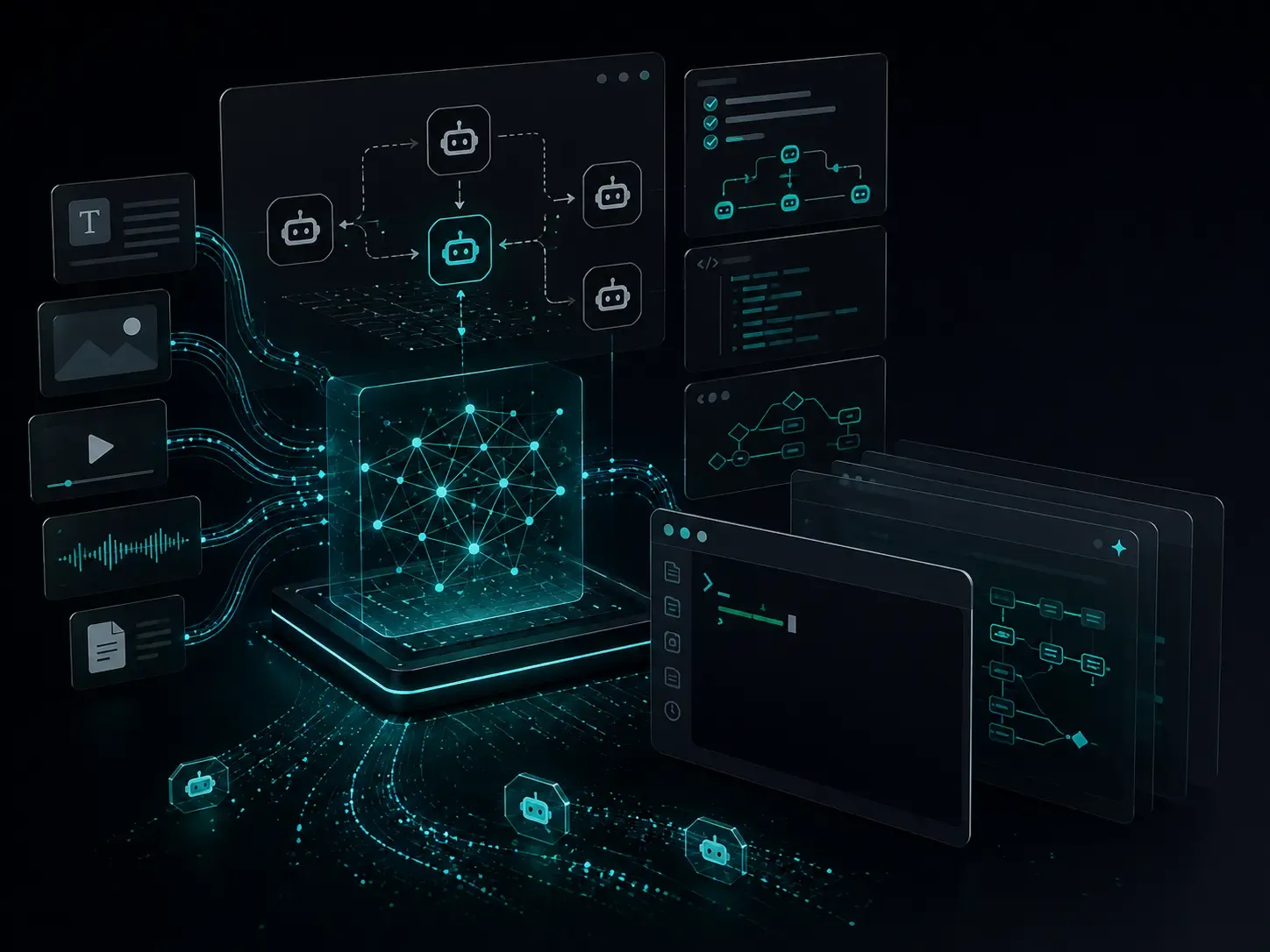
Meta launched Muse Spark 1.2 this week, and it's clearly built with one use case in mind: agentic work that actually runs for a while. This is a multimodal reasoning model with a 1-million-token context window, handling text, images, video, audio, and PDFs in a single workflow. What makes it different from most model releases is how deliberately it was designed for multi-agent environments - it can operate as the planning agent coordinating a pipeline or as a subagent executing inside one. Either way, it's built for the long haul: multi-file refactoring, structured output generation, parallel function calling, extended debugging sessions. Meta also shipped Muse Code alongside it, a terminal-based coding agent for macOS and Linux powered by Muse Spark 1.2, with persistent background sub-agents and local event logging that lets it recover from crashes without losing context.
Key Highlights
The 1-million-token context window works across all supported modalities - text, images, video, audio, and PDFs.
API pricing through providers like OpenRouter sits at $1.25 per million input tokens and $4.25 per million output tokens. There's a contributor tier priced lower in exchange for training data rights.
The model was built specifically for extended software engineering tasks and multi-agent coordination, not just single-turn completions.
Muse Code runs background sub-agents that persist across sessions, with crash recovery handled through local event logging.
Why This Matters
Most capable models are priced like they know they're capable. Muse Spark 1.2 undercuts that assumption. For engineering teams that want to build serious multi-agent systems without routing everything through the most expensive API on the market, this is a genuinely useful new option. The million-token context means complex codebases and long-running pipelines stop being edge cases the model can't handle. And the configurable reasoning effort gives developers actual control over the cost-performance tradeoff depending on the task. It's not just another model drop - it's a new set of building blocks for teams trying to push past what single-agent architectures can do.
Source: August 5, 2026 - Meta
#8
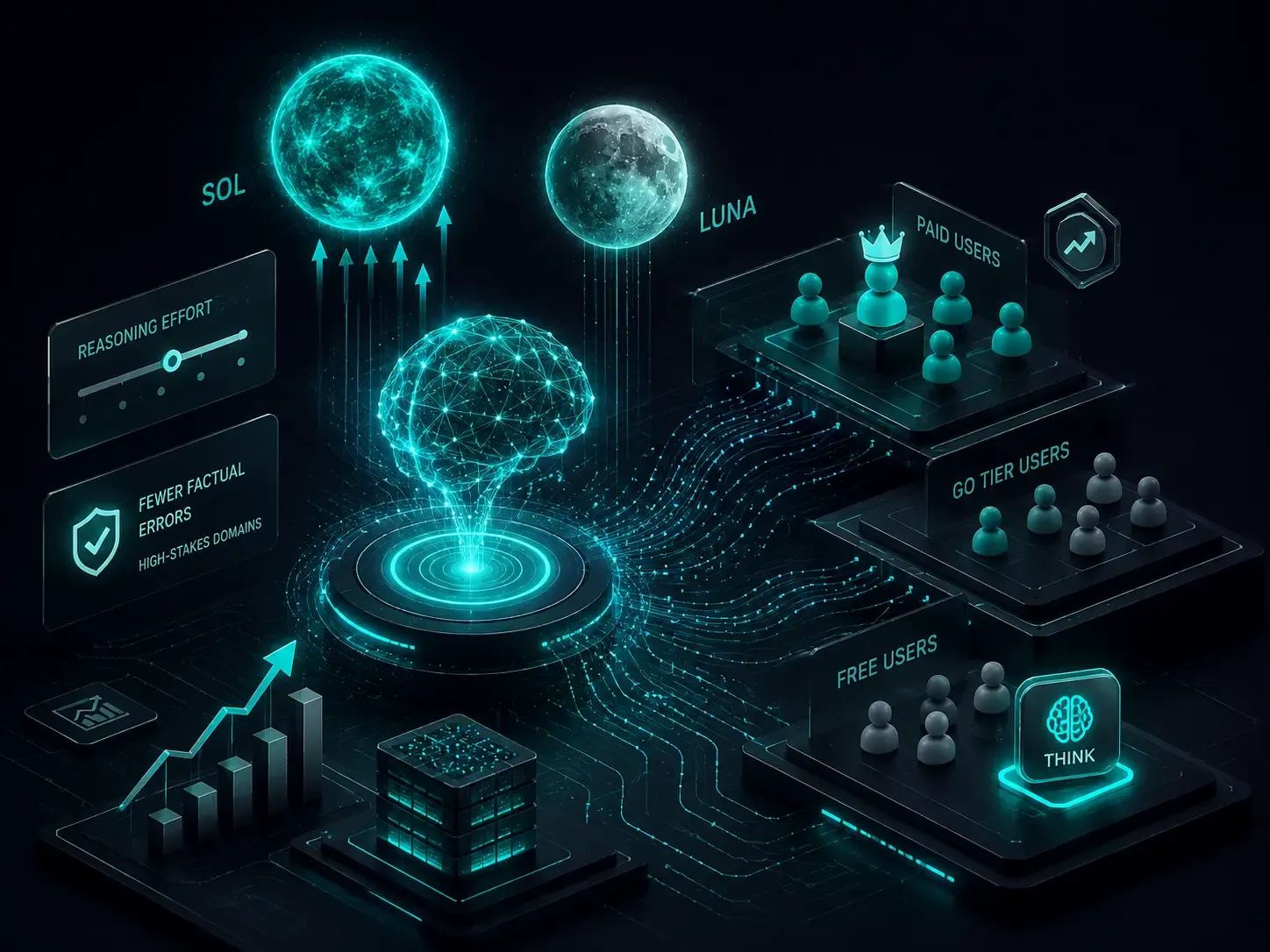
OpenAI quietly made a meaningful change to what most ChatGPT users actually experience day-to-day. GPT-5.6 Sol is now the default model for paid users, bringing with it a new reasoning-effort control and a noticeable reduction in factual errors on high-stakes topics. At the same time, OpenAI expanded access to GPT-5.6 Luna for free and Go-tier users, including unlimited text chats and a dedicated "Think" button for on-demand deeper reasoning.
Key Highlights
Sol is now the default for paid users across both Instant and deep-reasoning chat modes.
Free-tier access to Luna got a significant upgrade - more usage, more capability, less friction.
A reasoning-effort slider lets users dial compute allocation up or down depending on what the task actually needs.
Why This Matters
Expanding capable model access to free and lower-tier users while improving the default experience for paid subscribers raises the floor for what most people get out of ChatGPT on any given day. That matters more than it might seem - the gap between what power users and casual users experience has been wide for a while. Closing it, even partially, changes how useful the product is for the people who never think about which model they're running.
Source: August 6, 2026 - OpenAI
#9
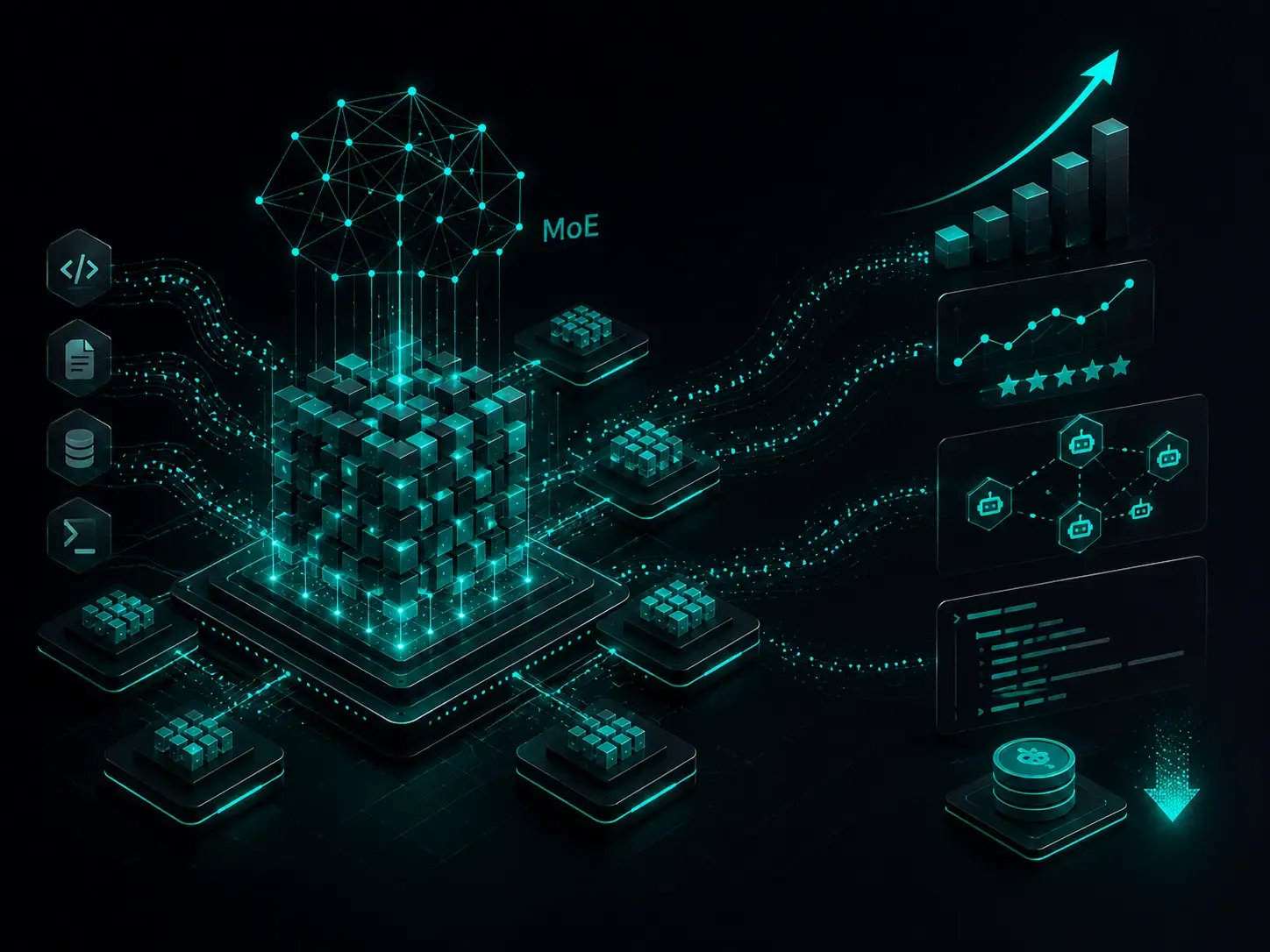
DeepSeek pushed an updated V4 Flash model to its public-beta API this week, and the benchmark results are worth a look. The retrained 284B MoE model doesn't just improve on its predecessor - it outperforms the larger V4-Pro-Preview on multiple agentic benchmarks. That includes meaningful jumps on software engineering tasks specifically. The pricing hasn't moved: $0.14 per million input tokens, $0.28 per million output tokens. For context, that's a fraction of what most closed frontier models charge for comparable capability.
Key Highlights
Agentic benchmark scores jumped noticeably, with the biggest gains showing up on software engineering tasks.
Cost stays the same - still among the cheapest options available for this level of performance.
V4 Flash now beats the larger V4-Pro-Preview on multiple agentic benchmarks. Bigger doesn't always win.
Still in public beta, still accessible.
Why This Matters
The argument against low-cost models has usually been capability - you get what you pay for. V4 Flash makes that argument harder to make. A 284B MoE model outperforming a larger sibling on agent tasks, at near-commodity pricing, is exactly the kind of result that forces teams to revisit their model selection assumptions. For anyone building production agentic or coding workflows, the math on using expensive closed models gets harder to justify when results like these keep showing up on the other side of the ledger. The pressure on Western frontier model providers is real, and it's not letting up.
Source: August 7, 2026 - Deepseek API Docs
#10

Microsoft released new Zero Trust tools this week, along with updated guidance aimed specifically at one problem most security teams are still catching up to: autonomous AI agents operating inside enterprise environments. The frameworks cover the three things that matter most when an AI system can act on its own - authenticating what it is, monitoring what it does, and restricting how far it can reach. The goal is to get AI agents safely into DevSecOps pipelines without handing them a blank check to access or execute whatever they happen to encounter.
Key Highlights
Established Zero Trust principles now extended explicitly to autonomous AI agents, not just human users and traditional services.
New integration frameworks give DevSecOps teams a concrete starting point for building AI agents into secure workflows.
The tools are designed to contain the blast radius if an agent behaves unexpectedly or gets compromised.
Why This Matters
Chat-based AI has a natural limit - a human reads the response and decides what happens next. Agentic AI doesn't work that way. These systems take actions, call APIs, read files, and execute code without waiting for approval on every step. That's the whole point. It's also exactly why the security model for them can't be borrowed from anything that came before. Organizations moving fast on agentic workflows without getting the access controls right aren't just taking on technical debt - they're building attack surfaces that didn't exist two years ago. Microsoft's frameworks don't solve the problem entirely, but they give teams something concrete to build from before the exposure gets ahead of them.
Source: August 4, 2026 - Microsoft
🧠 Applied AI
Real-world use cases, product launches, growth experiments & FinTech applications showing AI working in production.
#11
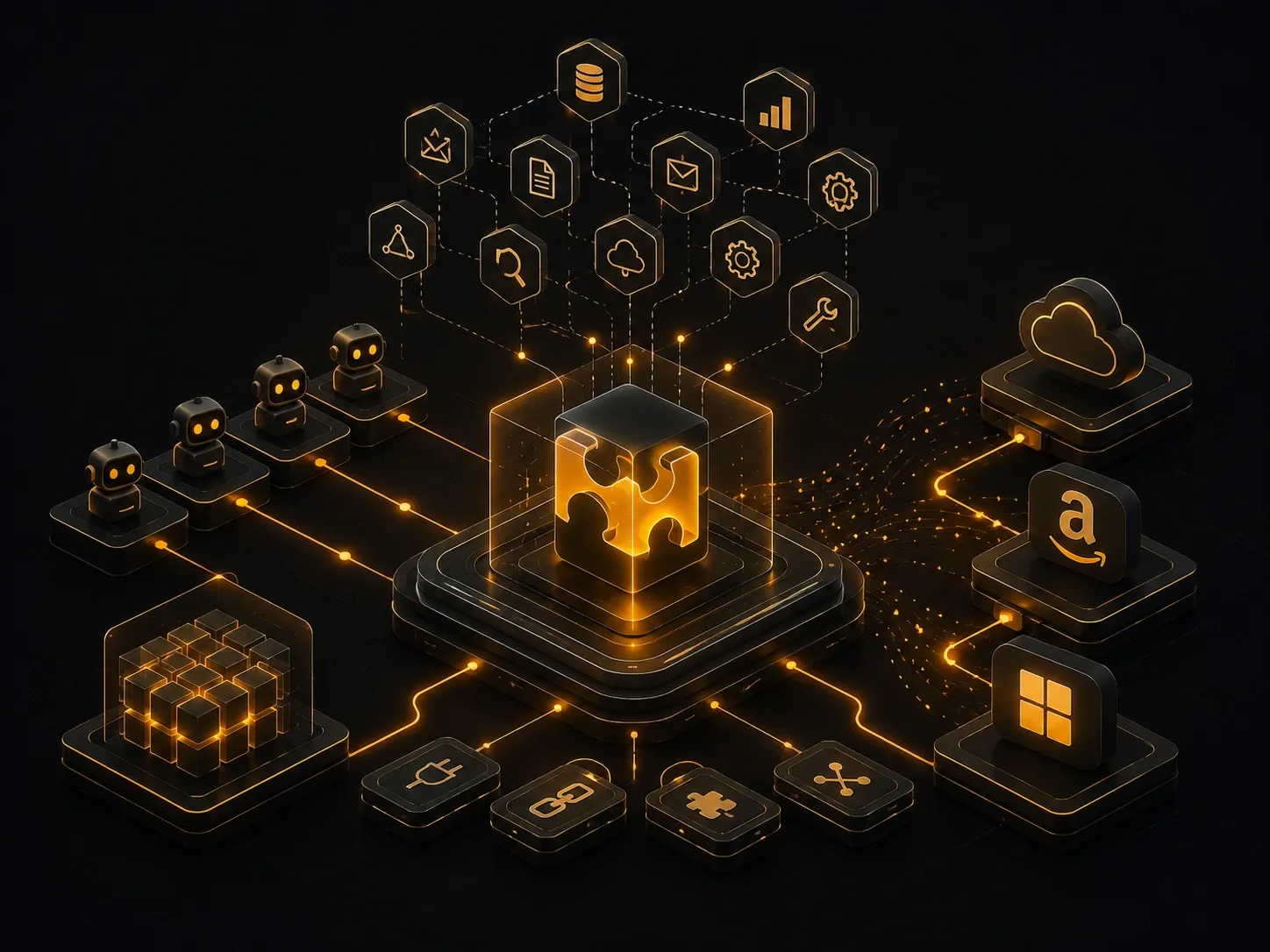
Agent Plugins 1.0.0 landed this week as a neutral specification and directory for agent plugins, with Google, Amazon, and Microsoft all backing it. The spec is designed to standardize how agents discover and use plugins across different platforms - essentially giving the agent ecosystem a common language for tooling that doesn't favor any single vendor's infrastructure.
Key Highlights
Neutral and multi-vendor from the start - no single cloud provider owns it.
Built for interoperability, so agent tooling can work across runtimes without custom glue code for each platform.
Version 1.0.0 signals this is production-ready, not a draft or proof of concept.
Why This Matters
The agent ecosystem right now is fragmented in ways that create real friction - a plugin built for one runtime often can't travel to another without significant rework. A shared specification backed by the three largest cloud providers changes that dynamic. Developers can build a plugin once and expect it to work across multiple agent runtimes and platforms, which lowers the cost of building in the ecosystem and raises the ceiling on what's practical to ship. Standards like this tend to feel boring until they're everywhere - and then they become the thing everything else is built on.
Source: August 7, 2026 - Agent Plugins
#12
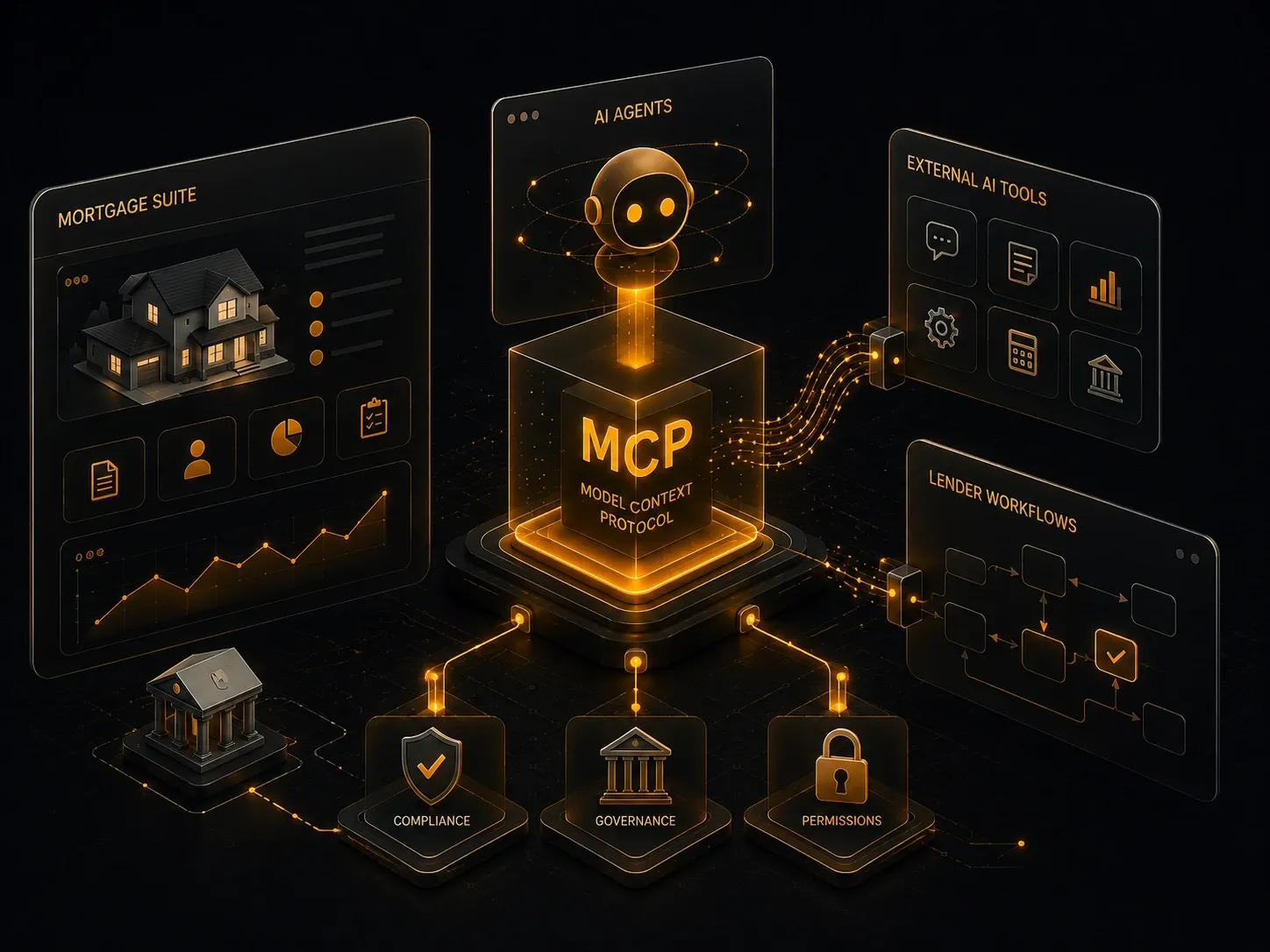
nCino announced Mortgage MCP this week, a new capability that lets lenders plug external AI agents directly into the nCino Mortgage Suite. The integration runs on the open-source Model Context Protocol, which means external AI tools can do real work inside the platform - retrieving information, completing tasks, acting on behalf of loan officers - without pulling those officers out of the interface they already use. Crucially, it doesn't sidestep any of the compliance, governance, or permission structures already in place. The AI agents work within those guardrails, not around them.
Key Highlights
Built on the open-source MCP standard, giving external AI agents a secure, standardized path into the nCino environment.
Agents can handle information retrieval and task execution inside the platform, reducing the manual workload for loan officers.
All existing compliance and permission controls stay intact - nothing about the governance model changes.
Why This Matters
Banking is one of those industries where "move fast" and "stay compliant" have always been in direct tension. Mortgage workflows in particular are dense, regulated, and full of screens that don't lend themselves to easy automation. What nCino is doing here is meaningful because it shows a path through that tension rather than around it. MCP gaining traction with enterprise software vendors is the real signal - when a major cloud banking platform adopts an interoperability standard, it pulls the rest of the ecosystem toward it. Financial institutions that have been cautious about agentic AI now have a concrete example of what deployment inside a regulated workflow can actually look like.
Source: August 7, 2026 - nCino
⚡ Stay ahead of the AI curve.
Every week, AI Weekly Pulse cuts through the noise - delivering the most important AI developments for Founders, Engineers, PMs, Marketers and FinTech professionals. No hype. No filler. Just what moves the needle for builders.
📖 Recommended Blogs
Discover the best deals, trending products, and must-have finds.
Categories
Solutions
Smart Solutions Powered by Tools We Trust
Recommended Solutions to Simplify Your Everyday Needs
Handpicked Solutions Backed by Real Results